Stay informed
Newsletters
Unleash the full potential of Automated People Analytics with advanced AI. But just how effective is this technology?
Date:
Dec 30, 2022
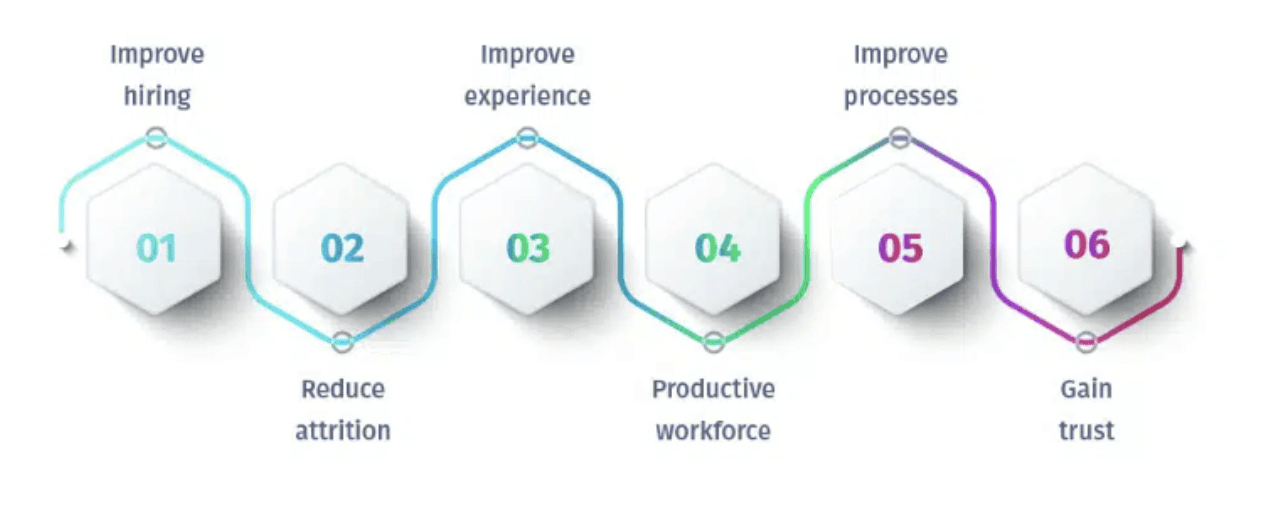
What is People Analytics?
Definition: People analytics is the practice of using data and analytics to understand and optimize the performance and potential of individuals and teams within an organization. It involves collecting and analyzing data about people-related factors such as skills, performance, engagement, retention, and more, and using this data to inform decision-making and drive improvements in HR and talent management practices.
Automated people analytics refers to the use of technology, such as artificial intelligence or machine learning algorithms, to automate the process of collecting and analyzing data about people-related factors within an organization. Automated people analytics can potentially improve the efficiency and accuracy of people analytics efforts, allowing organizations to process and analyze larger volumes of data more quickly and to identify trends and patterns that might not be apparent through manual analysis.
One key difference between people analytics and automated people analytics is the role of technology in the process. While people analytics may involve manual data collection and analysis, automated people analytics relies on technology to automate these tasks. This can potentially improve the speed and accuracy of the analytics process, but it also raises a number of ethical and legal concerns, including issues related to privacy, bias, and discrimination. It is important for organizations to carefully consider these issues and put appropriate safeguards in place to ensure responsible and ethical use of automated people analytics.
But we would like to make a big note:
It is important for organizations to carefully consider the ethical and legal implications of collecting and using data in people analytics and to put appropriate safeguards in place to ensure responsible and ethical use of this data. This may include establishing policies and procedures for the collection and use of personal data, implementing processes to identify and mitigate bias, and providing transparency and accountability around the use of data in people analytics efforts.
Why does People Analytics exist?
People analytics exists because organizations want to understand and optimize the performance and potential of their employees and teams. By collecting and analyzing data about people-related factors such as skills, performance, engagement, retention, and more, organizations can gain insights into the strengths and weaknesses of their workforce, identify areas for improvement, and make informed decisions about how to allocate resources and support employee development.
There are a number of factors that drive the use of people analytics, including:
Increased competitiveness: Organizations are increasingly using people analytics to stay competitive in today's rapidly changing business environment. By using data and analytics to identify trends and patterns in the workforce, organizations can make informed decisions about how to allocate resources and support employee development in order to stay ahead of the curve.
Improved efficiency: People analytics can help organizations to streamline and optimize HR and talent management processes, improving the efficiency of these efforts and reducing the time and resources required to manage the workforce.
Enhanced decision-making: People analytics provides HR and talent management professionals with data-driven insights that can inform decision-making and help to ensure that resources are being used effectively.
Greater accountability: People analytics can provide a greater level of transparency and accountability around HR and talent management decisions, helping organizations to ensure that they are aligned with business goals and objectives.
Enhanced personalization: People analytics can enable organizations to tailor their HR and talent management efforts to the specific needs and preferences of individual employees, improving the personalization of these efforts and potentially increasing employee satisfaction and engagement.
Can People analytics help to become more data driven, and link this to your decision making?
Yes, people analytics can help organizations to become more data-driven in their decision-making, particularly in the HR and talent management functions. By collecting and analyzing data about people-related factors such as skills, performance, engagement, retention, and more, organizations can gain insights into the strengths and weaknesses of their workforce and make informed decisions about how to allocate resources and support employee development.
By using people analytics to inform decision-making, organizations can become more data-driven in their approach to HR and talent management, potentially leading to improved outcomes and greater success. It is important, however, for organizations to carefully consider the ethical and legal implications of using data in people analytics and to put appropriate safeguards in place to ensure responsible and ethical use of this data.
The most important data sources to solve People Analytics issues?
People analytics is the use of data and analytics to inform decision-making around HR and talent management. In order to effectively use people analytics, organizations need to have access to high-quality data sources. In this list, we have compiled more than 30 potential data sources that organizations can use to solve people analytics issues. From HRIS data and surveys to social media data and external labor market data, these data sources can provide valuable insights into the workforce and inform HR and talent management efforts:
HRIS: Human Resource Information Systems (HRIS) are computer systems that store and manage HR data, such as employee records, payroll data, and benefits information. HRIS data can be a valuable source of information for people analytics efforts.
Surveys and assessments: Surveys and assessments can be used to collect data about employee attitudes, opinions, and behaviors. This data can be analyzed to identify trends and patterns and inform decision-making around HR and talent management practices.
Social media: Social media platforms such as LinkedIn, Twitter, and Facebook can be a rich source of data about employee skills, experiences, and preferences. This data can be used to inform talent acquisition and employee development efforts.
External labor market: data from job search websites or salary surveys, can provide insights into the supply and demand for certain skills and the competitive landscape for talent.
Performance: employee productivity, quality of work, and customer satisfaction, can be used to inform performance management and employee development efforts.
Exit interview: Exit interview data, collected when employees leave an organization, can provide insights into the reasons behind employee turnover and help to inform retention and succession planning efforts.
Behavioral: employee attendance and punctuality, can be used to inform HR and talent management efforts.
Skills: data collected through employee profiles or career development plans, can be used to inform talent acquisition and employee development efforts.
Engagement: data collected through surveys or focus groups, can be used to identify factors that contribute to employee engagement and to develop interventions to improve engagement.
Retention: employee turnover rates and length of service, can be used to identify factors that contribute to employee retention and to develop interventions to improve retention.
Succession planning: employee career aspirations and development plans, can be used to inform succession planning efforts.
Talent acquisition: job applicant pools and hiring outcomes, can be used to inform talent acquisition efforts.
Compensation: salary and benefits, can be used to inform HR and talent management efforts.
Diversity and inclusion: diversity of the workforce and the prevalence of diverse candidates in the applicant pool, can be used to inform diversity and inclusion efforts.
Employee sentiment: data collected through surveys or social media monitoring
Employee demographics: data on age, gender, race, and ethnicity, can be used to inform HR and talent management efforts.
Workforce planning: employee headcount and workforce composition, can be used to inform HR and talent management efforts.
Talent management: employee development and training, can be used to inform HR and talent management efforts.
Employee feedback: through surveys or focus groups, can be used to inform HR and talent management efforts.
Employee mobility: data on transfers, promotions, and job changes, can be used to inform HR and talent management efforts.
Time and attendance: data on employee attendance and punctuality, can be used to inform HR and talent management efforts.
Recruitment: job applicants, hiring outcomes, and source of hire, can be used to inform HR and talent management efforts.
Job satisfaction: data collected through surveys or focus groups, can be used to inform HR and talent management efforts.
Employee retention: employee turnover rates and length of service, can be used to inform HR and talent management efforts.
Employee productivity: output or efficiency, can be used to inform HR and talent management efforts.
Employee engagement: data collected through surveys or focus groups, can be used to inform HR and talent management efforts.
Employee training: data on training programs, participation, and outcomes, can be used to inform HR and talent management efforts.
Employee development: career development plans and progress, can be used to inform HR and talent management efforts.
Employee wellness: physical and mental health, can be used to inform HR and talent management efforts.
Employee mobility: transfers, promotions, and job changes, can be used to inform HR and talent management efforts.
Employee communication: data on the frequency and effectiveness of communication between employees and managers, can be used to inform HR and talent management efforts.
Employee performance: productivity, quality of work, and customer satisfaction, can be used to inform HR and talent management efforts.
The ideal kind of data source will also depend on data availability inside the company and the specific application. For instance, it is not possible to do employee communication analysis when the communication is done via different and not monitored platforms (public email services, public messaging apps, and more). Also it is important to increase diversity in all senses, because those kind of analysis can get easily biased towards the data that was used to model it.
Conclusion
People analytics is the practice of using data and analytics to understand and optimize the performance and potential of individuals and teams within an organization. Automated people analytics refers to the use of technology, such as artificial intelligence or machine learning algorithms, to automate the process of collecting and analyzing data about people-related factors. People analytics can provide valuable insights into the strengths and weaknesses of an organization's workforce, helping to identify areas for improvement and inform decision-making. However, it is important for organizations to carefully consider the ethical and legal implications of collecting and using data in people analytics and to put appropriate safeguards in place.