Stay informed
Newsletters
Integration Doesn’t Need to Be This Hard!
Date:
Apr 28, 2025
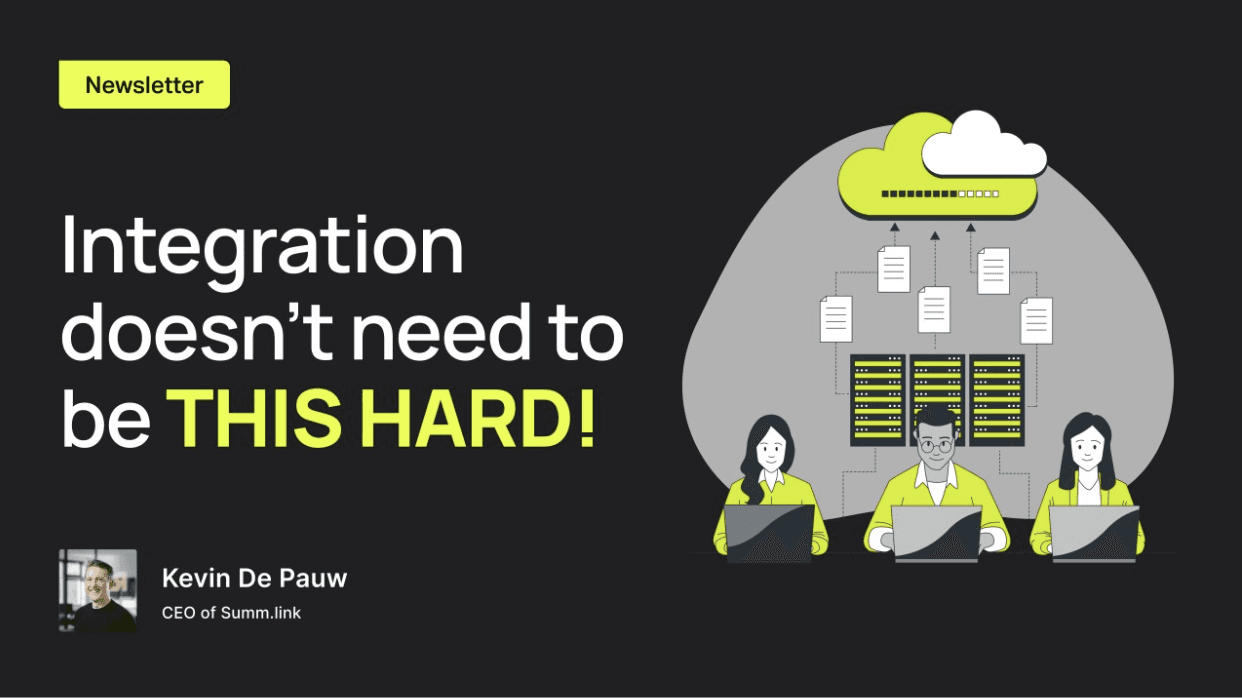
Every new tool we adopt, every platform we bring in, turns into a small war of endpoints, docs, and workarounds. Our engineers spend more time gluing systems together than building new ideas. And we just accept it. Like it’s the cost of doing business in a modern stack.
But what if we didn’t have to?
A few weeks ago, I had a conversation with Xavier Geerinck—someone whose perspective I really value. We were talking about MCP, short for Model Context Protocol, and he said something that stuck:
“MCP isn’t just a better protocol. It’s a shift in how systems collaborate.”
That’s what makes this idea different. It’s not another integration tool. It’s a shared context. A mutual understanding between systems. If you’re wondering what that actually means in practice, here’s a simple way to think about it:
Before USB: Every device had its own cable. Different ports, drivers, frustrations.
After USB: You plugged it in. And it worked.
MCP could be USB for software. A universal way for tools and AI agents to share context—without requiring custom code for every new connection.
Why It Matters (Especially Now)
At Summ.link, we’re starting to explore MCP because the problems it addresses are the ones we run into daily:
Every new integration feels like a mini rebuild
Our devs spend more time maintaining glue code than pushing features
Data gets lost in translation between platforms
Growth starts to feel like patchwork, not progress
By introducing a shared context layer, MCP has the potential to remove the heavy lifting we’ve grown used to.
Here’s what that might actually mean in day-to-day terms:
The Impact We’re Hoping For
Less rework You connect once. Not every time.
Faster innovation cycles Dev teams spend time building the product, not stitching it together.
Lower integration costs Because the baseline is smarter and shared.
Cleaner data flow Which means fewer blind spots in decision-making.
I don’t believe in magic solutions. We’ve all seen our fair share of tech promising to “revolutionize” things.
But I do believe in patterns. And this one feels familiar:
Shared protocols making the web interoperable
Open standards pushing hardware forward
Composable systems unlocking scale
MCP feels like one of those moments—quiet, but with serious potential to reshape the way we build and connect things.
And most importantly, it shifts our energy back to where it belongs: Creating things that actually matter.
We spend a lot of time talking about how to scale companies.
Maybe it’s time we start talking more about how we scale understanding—between people, teams, and tools.
Because the businesses that get there first? They’re not just more efficient. They’re freer.
Interested in exploring more episodes of "AI Advances: Stay up-to-date"?
#32 Integration Fatigue Is Real—But It Doesn’t Have to Be
#31 Data Ecosystems Explained: The Lego Principle for Scalability
#30 Beyond Buzzwords: Data Governance in Practice
#29 The Future of AI Interoperability: What Businesses Need to Know
#28 What role does AI play in the future of workplace learning?
#27 How Do Data & AI Regulations Impact Innovation?
#26 Which AI skill is most valuable in 2025?
#25 Vertical AI is TRANSFORMING HR, and not REPLACING your job!
#24 Understanding Vertical AI and Multi-Agent Systems
#23 The Real Challenge of AI Adoption: Understanding the Problem Before Choosing the Solution
#22 Cache-Augmented Generation (CAG): Revolutionizing AI Efficiency, by replacing RAG
#21 Vertical AI – (R)evolutie na SAAS
#19 Business hebben, een walk in the park toch!? Of toch niet!?
#17 De markt staat in brand! Is er een War for Talent, War for Jobs of beide?
#16 Naar een Efficiëntere Overheid: Balanceren tussen Besparingen, Technologie en Burgergerichtheid
#15 Game Changer Alert: EU Supercomputers Open Doors for HR-AI Companies!
#14 Navigating the Changing Landscape in HR and Sales: How AI is reshaping Careers!
#13 Empowering the Future: Why Every Child Should Learn AI
#12 Trust as a Foundation: Unveiling Summ.link's ISO 27001 Certification and Its Impact | LinkedIn
#11 Introducing GPT-4 API: Empower Your AI Projects with Unmatched Performance
#10 Data science as a service (DSaaS)
#9 The Data-Driven organization: What it Means to Be One & Why it Matters!
#8 Explainable Artificial Intelligence (XAI) Frameworks for Transparent AI Systems
#6 The Benefits and Importance of People Analytics for HR and Talent Acquisition Teams
#5 Unlock the Power of People Analytics: Harness the Potential, Navigate the Challenges
#1 Exploring the World of Gen-AI: From Machine Learning to Language Models