Stay informed
Newsletters
Avoiding the AI Spaghetti Effect and Building Systems You Can Trust
Date:
Jun 23, 2025
We’ve all seen the headlines: AI is transforming how businesses operate.
And it’s true, when done right, AI can be an incredible catalyst for speed, efficiency, and innovation. Just look at how protocols like A2A are laying the groundwork for agents to collaborate in structured, reliable ways. That’s a good thing.
But there’s another side of the story that often gets missed. The real challenge isn’t adopting AI, it’s managing it.
We’ve been here before. Remember how SaaS promised simplicity? Fast forward a few years, and companies were buried under dozens of disconnected tools, overlapping subscriptions, and systems that barely talked to each other. What started as a way to streamline work turned into technical debt and chaos.
The same risk is already creeping into AI.
AI agents are the next wave. They promise autonomy, collaboration, and faster decision-making. But if every team spins up their own set of agents, without a system to govern them, you don’t get collaboration. You get confusion.
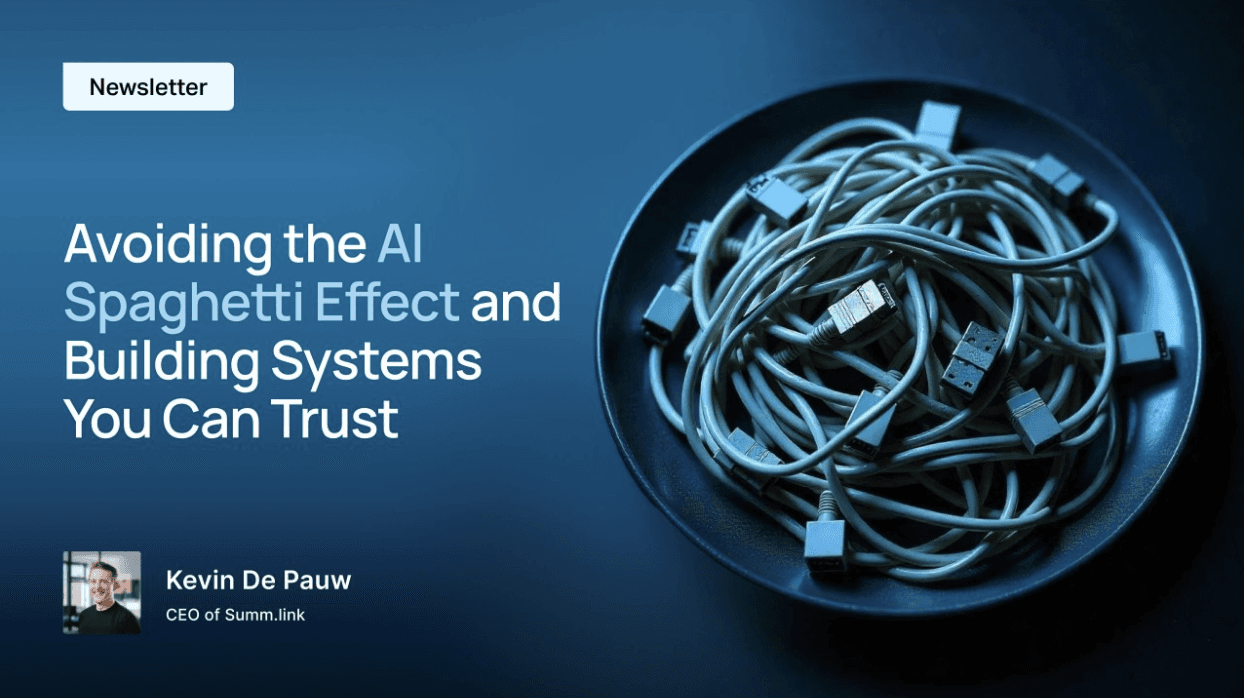
It’s what I call the Spaghetti Effect.
Too many agents, no clear communication standards, overlapping responsibilities, suddenly, your AI ecosystem looks like a tangled mess. And when that happens, output slows down, errors multiply, and your systems become fragile.
That’s where ACP (Agent Communication Protocol) comes in.
Think of ACP as the invisible infrastructure that keeps your AI agents from stepping on each other’s toes. It standardizes how they communicate, collaborate, and share tasks, no matter which framework they’re built on.
Done right, ACP gives you:
✅ A scalable way to add AI agents without losing control
✅ Offline discoverability, so agents only run when needed
✅ Simpler troubleshooting when things go wrong
✅ A more resilient AI ecosystem that can grow without collapsing
But here’s the part most companies overlook:
You don’t need hundreds of AI agents to create value. Start small. Align your teams. Build with governance in mind from day one.
A question for your business: Is AI solving problems or creating new ones?
Before adding more AI tools or agents, ask yourself:
Do we have a clear system for how these agents interact?
Are responsibilities clearly defined or are agents duplicating tasks?
Is there visibility into how decisions are being made?
Are we managing the lifecycle of each agent or just spinning them up and hoping for the best?
If the answers feel unclear, take a pause.
You don’t scale AI by adding more tools. You scale AI by building the foundations that keep those tools working together.
If your teams are exploring multi-agent systems or already facing the complexity creep, now’s the time to look at protocols like ACP. The earlier you bring structure, the easier it is to scale without regrets.
Because the only thing worse than no AI… is AI you can’t control.
We covered everything from protocol standards to the real-world risk of “agent sprawl” in our latest LuminaTalks episode.
Sandi Besen, one of our guests from IBM, said it best: "You want to know what's available so you can manage your resources appropriately, spin up that server when it’s needed, and spin it back down when it’s not."
If you care about building AI systems that last, and don’t unravel, it’s worth a listen:
🎧 Listen to the episode on Spotify
📺Watch the full conversation on YouTube